Islands Near Zadar: The Easiest Day Trips (and How to Get to Each)
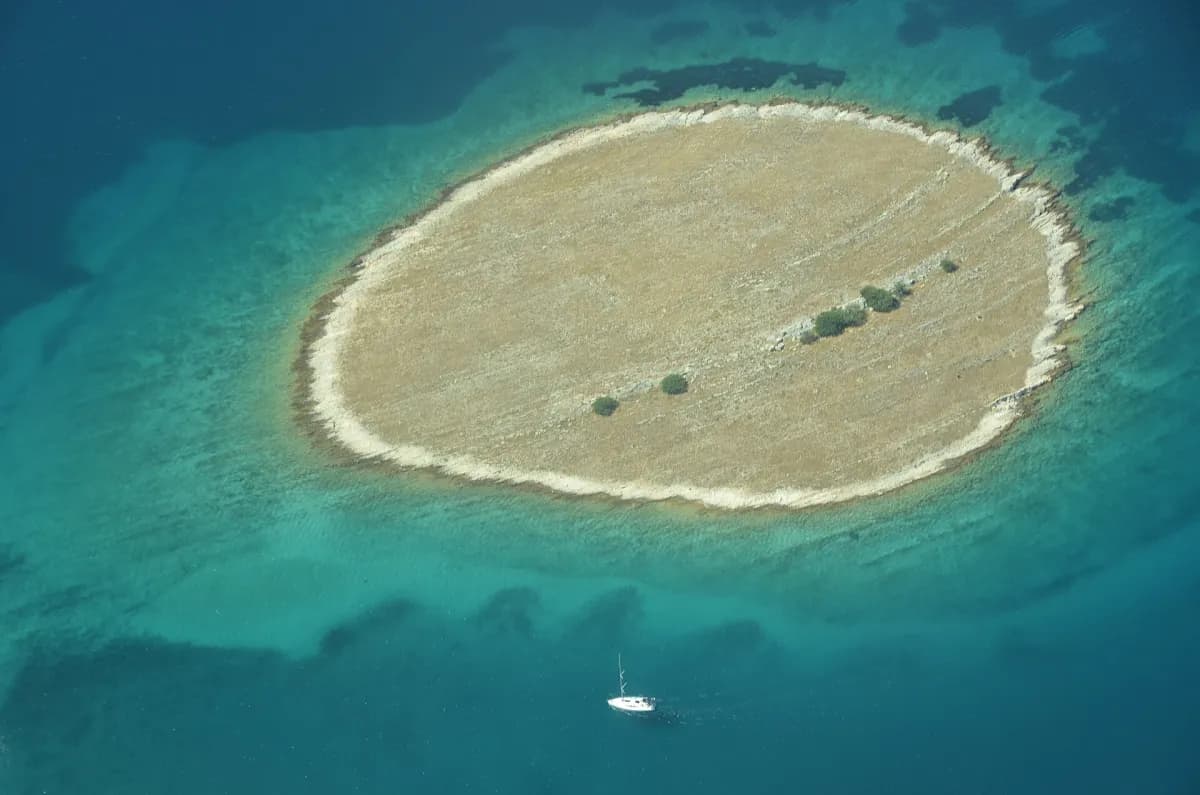
Say "island" and most people picture a ferry terminal, a timetable, and a day half-spent getting somewhere. Around Zadar, that's often not how it works. Several of the islands here are joined to the mainland by a bridge — you simply drive onto them, the way you'd drive to the next town.
That one fact changes how you plan a trip. So instead of listing these islands by size or fame, here they are by how easy they are to reach: the ones you can drive to first, then the ferry ones, then two places that aren't quite islands but feel like it.
At a glance
- Vir — bridge, about 30 minutes. Easy beach day, lively nights.
- Pag — bridge, about 1 hour to Pag town. Moon landscape, cheese, parties.
- Murter — bridge, about 1 hour. The gateway to the Kornati islands.
- Ugljan and Pašman — car ferry, 25 minutes. Two islands, two viewpoints, one trip.
- Dugi otok — ferry or catamaran, over an hour. A full day, not a half one.
- Nin — two stone bridges, 15 minutes. Sand, shallow water, Velebit views.
Part 1 — The ones you can drive to
Vir
A 378-metre bridge, built in 1976, and about half an hour from Zadar to Vir. That's it — no planning required.
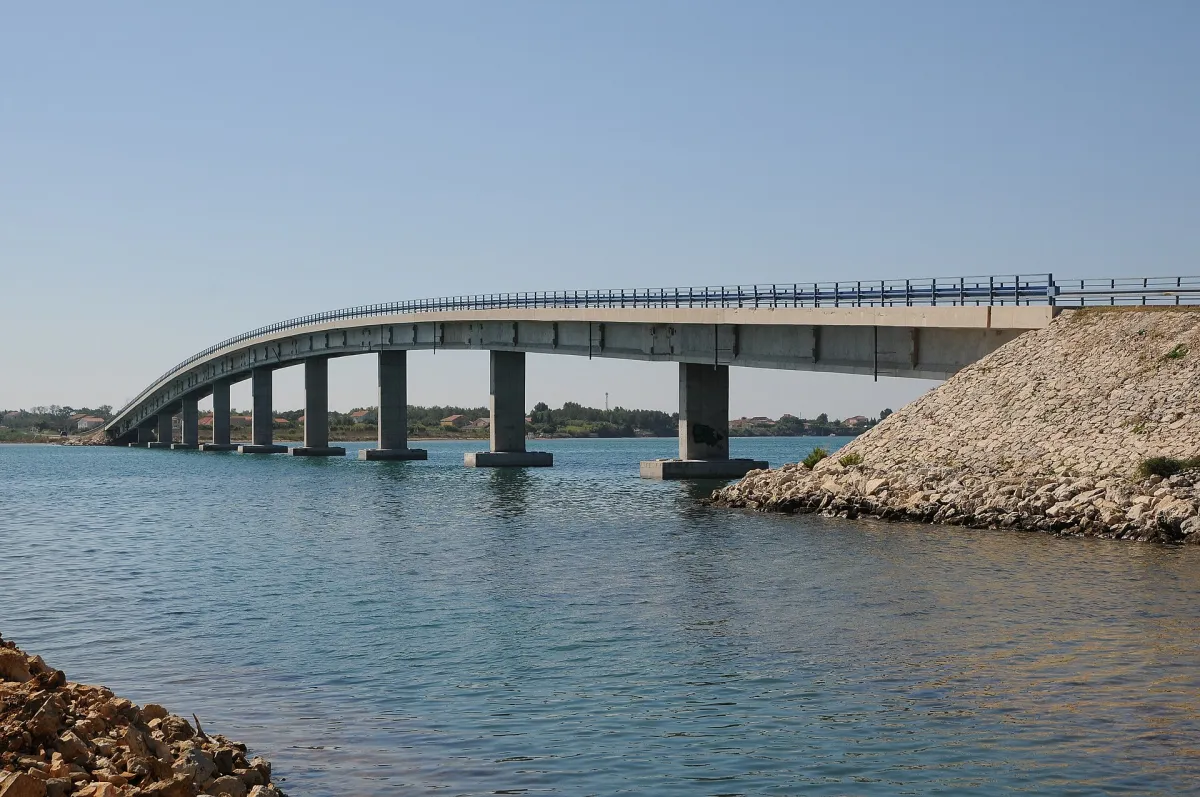
Vir is the one I'd point at for a straightforward beach day. The sea is shallow and warms up early, and there's actual sand in places, which is rarer on this coast than visitors expect.
It's also the liveliest island on this list after dark. Vir has a real nightlife — beach bars that run late, open-air clubs, music along the waterfront, DJ nights through the summer. If you want a day in the water and then a proper night out without driving back into the city, this is the one.
The honest caveat: Vir is heavily built up. Apartment blocks have gone up fast and thickly, and nobody comes here for the scenery. Come for the water, the easy logistics and the nights out — not for the views.
Pag
Cross the Pag Bridge at the island's southern tip and you're about an hour from Pag town, an hour and a half from Novalja.
Of everything on this list, Pag is the one that doesn't feel like Croatia at all. The northeastern side has been scoured bare by the bura, the cold wind that comes down off the Velebit mountains, and what's left is pale rock, stone towers and gravel running down to impossibly blue water. People call it a moon landscape and for once the cliché is accurate — it genuinely looks like somewhere else.
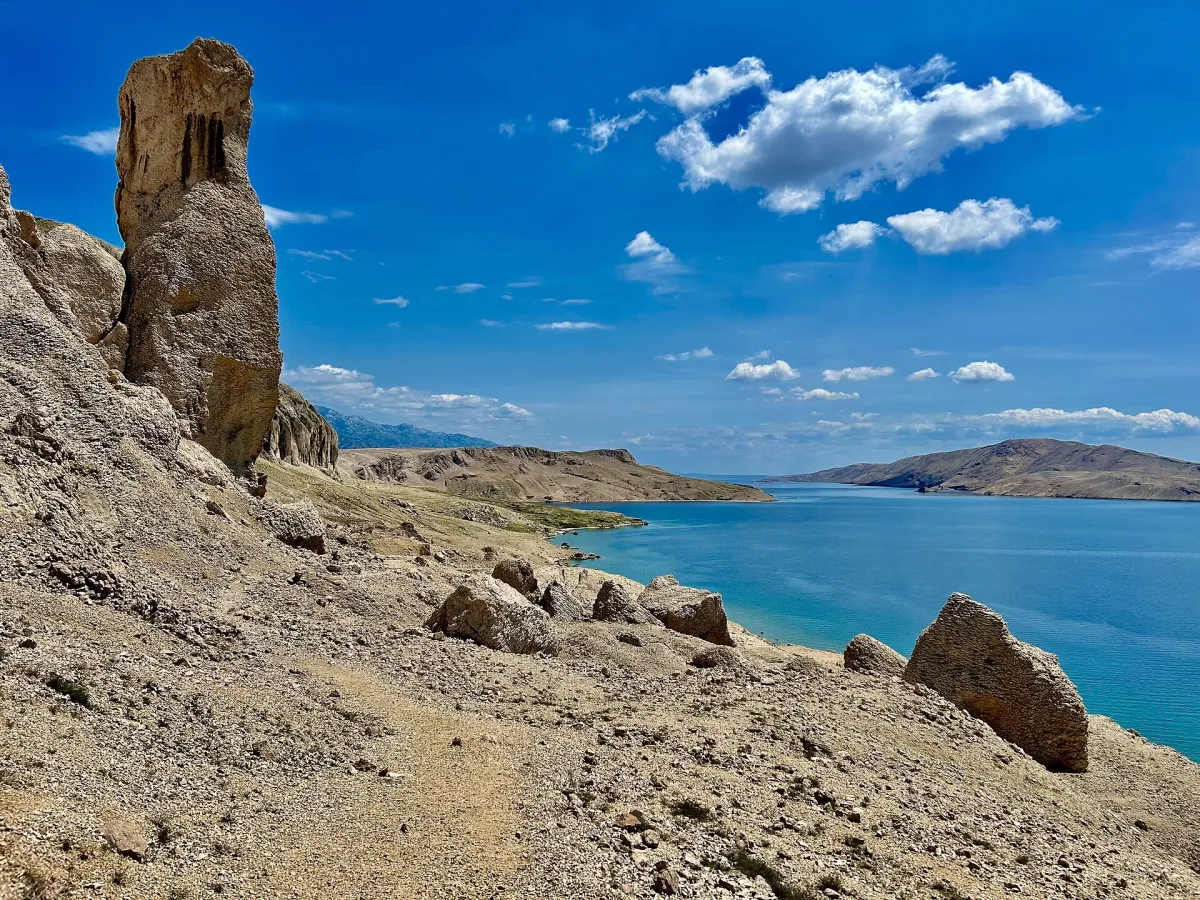
What surprises people is that the island has two completely different halves. One side is that stark, deserted rock; the other is green and gentle and ordinary. You can drive between them in twenty minutes and feel like you've changed country. And crossing the bare side you'll pass the sheep — thousands of them, grazing on almost nothing, which is the whole reason the cheese tastes the way it does.
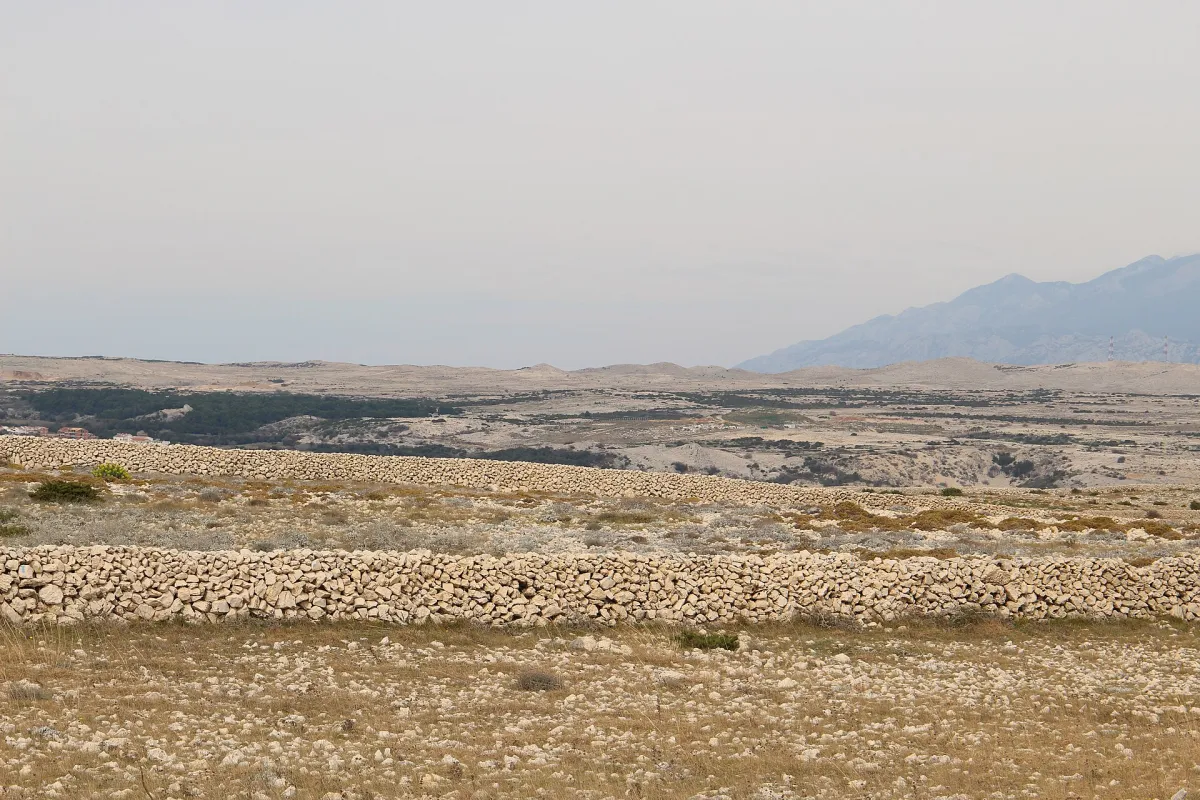
Metajna is the part I'd tell you not to skip. It's a small village on the wild side with genuinely beautiful beaches — Ručica and Beritnica among them, where boulders sit out in shallow water clear enough to count the stones.
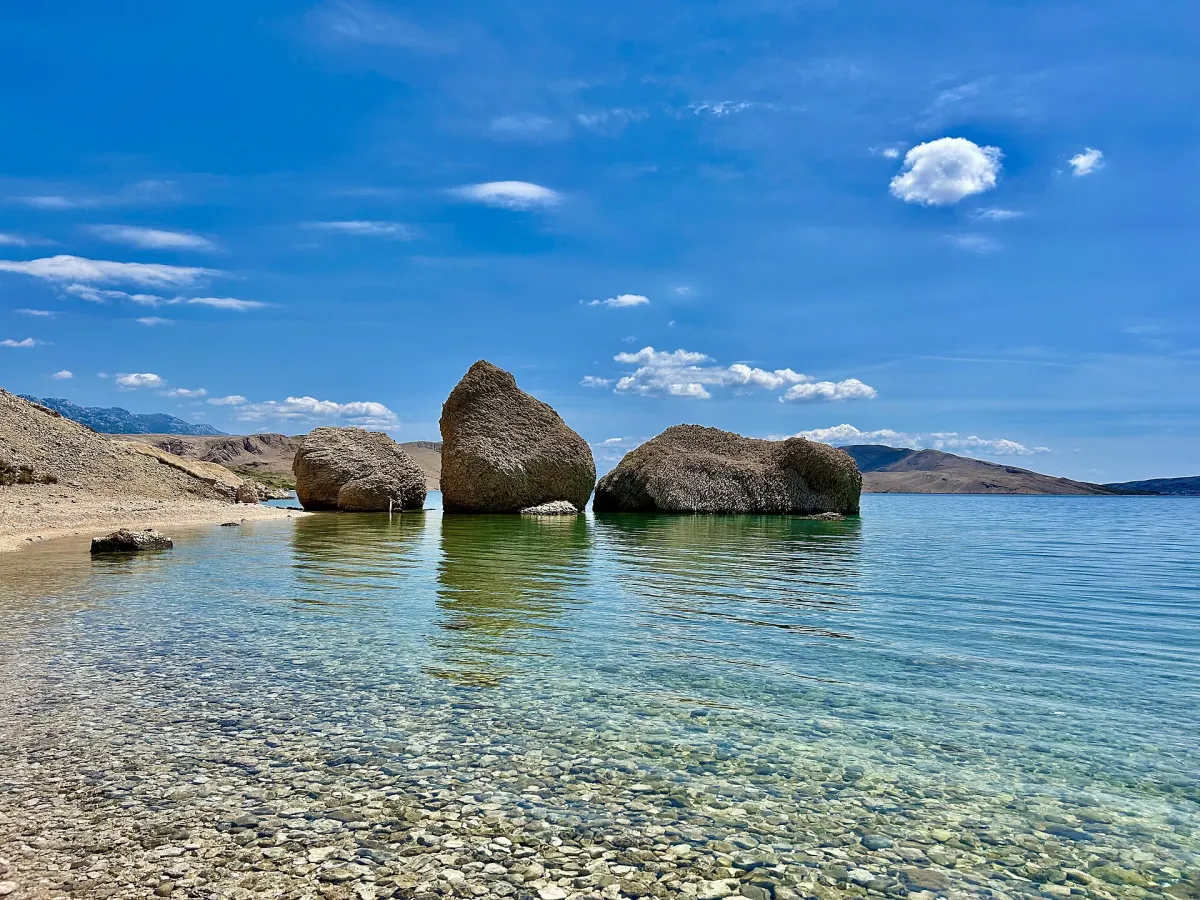
It's also the best walking on the island. The Life on Mars trail starts in Metajna, where you can leave the car — four marked routes totalling about 16 kilometres, opened in 2019, running above those beaches and past Stogaj, one of the most striking stone towers on the Adriatic. It's become genuinely popular, and deservedly so. You don't need to walk the whole thing — plenty of people take one route down to a beach and back.
Just don't come to Metajna expecting to have it to yourself. It's well known now.
And at the other extreme, on the same island, Zrće is Croatia's best-known party beach, all open-air clubs and daytime DJs. It's genuinely useful that both exist here: two people wanting opposite holidays can share a car.
Pag is also worth it for what comes off it. Paški sir, the hard sheep's-milk cheese. The needlepoint lace, added to Croatia's UNESCO intangible heritage list in 2009. And the salt pans outside Pag town, worked for centuries.
Murter
About 60 kilometres, roughly an hour — but with one quirk worth knowing. You reach Murter over a small drawbridge at Tisno, and it lifts on a published schedule to let boats through. Check it before you plan lunch on the far side.
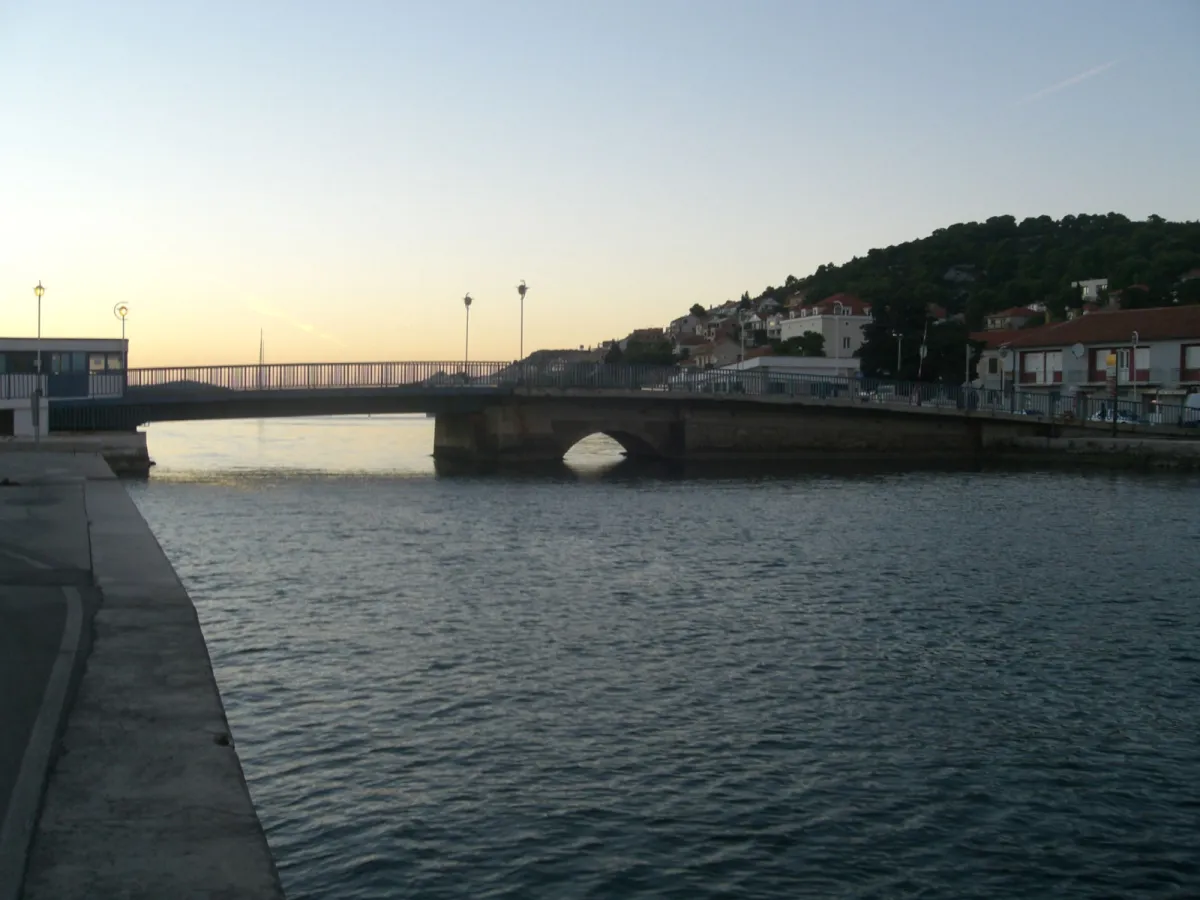
The main reason people come is that Murter is the launching point for boat trips into the Kornati — that scatter of bare, uninhabited islands that looks unreal from the air. Most Kornati day trips leave from here.
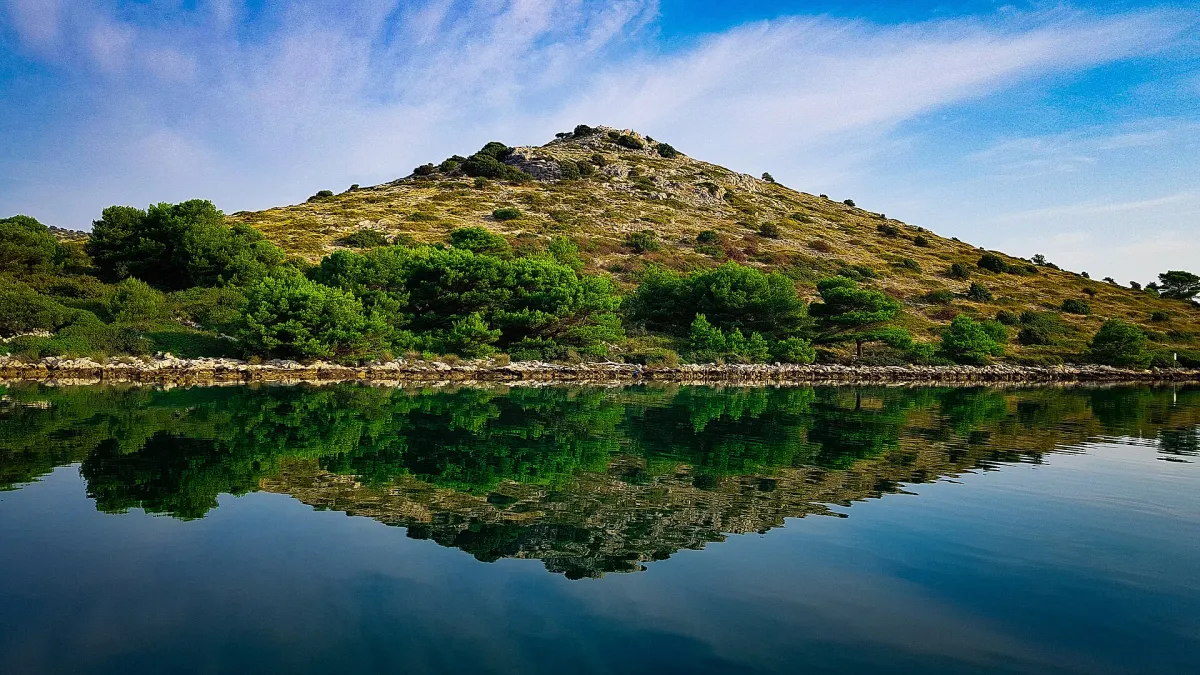
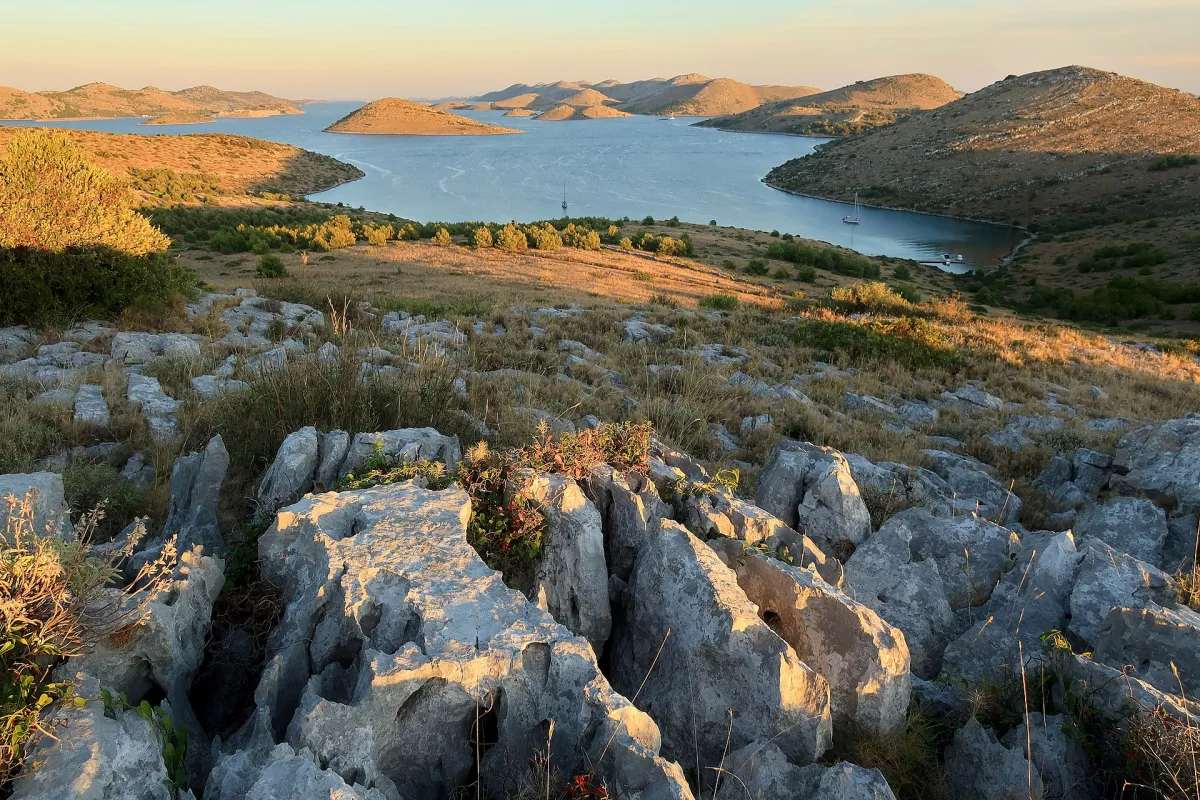
Go late in the day if you can. The Kornati are stone and scrub and not much else, which sounds unpromising until the sun drops and the whole archipelago turns gold.
There's also a specific draw for anyone who likes abandoned places: an old Italian bunker, left to the weather — and the tunnels running back into the hillside behind it. Bring a torch and decent shoes. If empty concrete and dark passages are your thing, it's a genuinely good one.
Part 2 — The ferry ones
Ugljan & Pašman
This is the easiest ferry trip from Zadar by a wide margin, and it gets you two islands for one crossing.
The car ferry from Zadar to Preko takes about 25 minutes and runs 25 to 29 times a day in high season. At that frequency you don't really plan around it — you turn up and go, which is not something you can say about most island ferries.
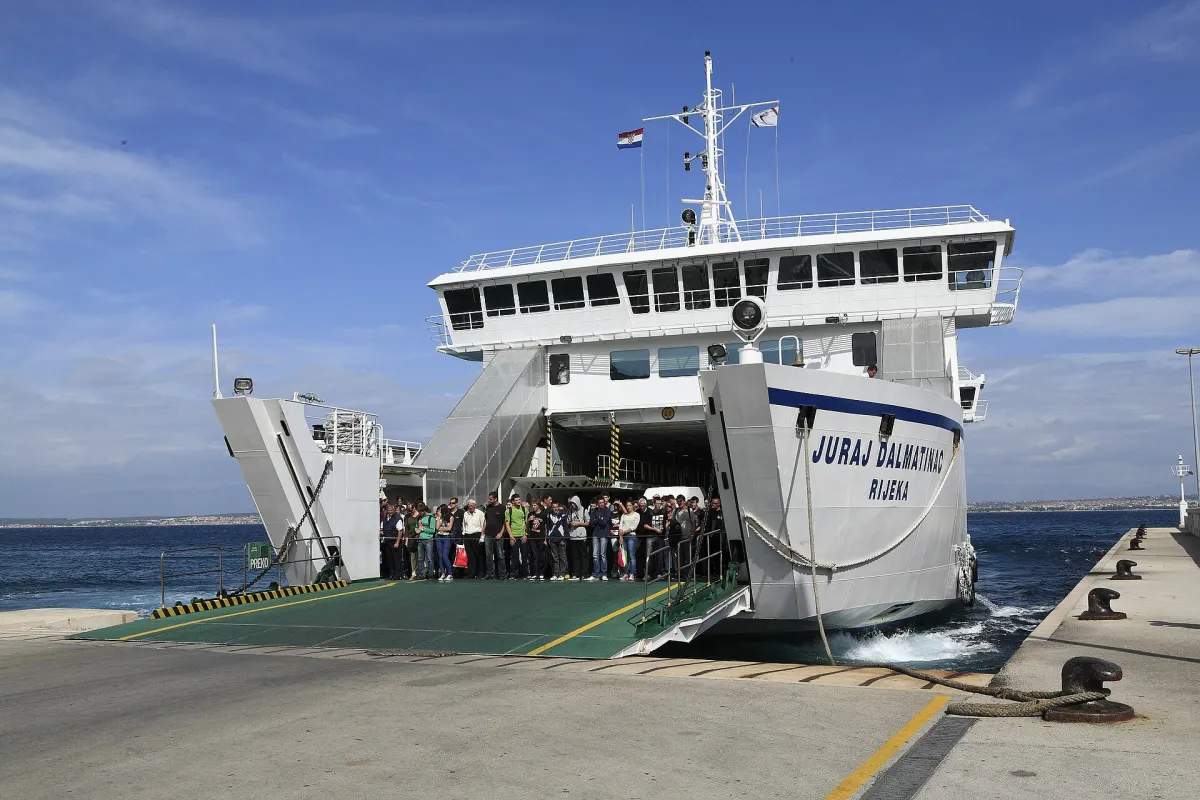
Both islands have a viewpoint worth the trip, and — importantly — you can drive to both.
St Michael's Fortress sits 265 metres above Preko, and the view from it back across the water at Zadar and the whole archipelago is the best you'll get anywhere around here. There's a road up, so you can drive it; if you'd rather walk, the trail from Preko is about 2.5 kilometres and takes roughly an hour.
Down at sea level, the islet of Galevac holds a Franciscan monastery a few strokes offshore from Preko — you get rowed across by the local barkajol, which is exactly as charming as it sounds. And Ugljan is covered in olive groves; there are more than 200,000 olive trees on the island.
From Ugljan, the Ždrelac bridge drops you straight onto Pašman, no second ferry involved. Down in Tkon there's Ćokovac hill and the last active Benedictine monastery in Croatia. And Veliki Bokolj, at 274 metres the island's highest point, gives you the second big view of the day — again, drivable.
Dugi otok
Let's be straight about this one: Dugi otok is a full day, not a half day. It's also the one where which boat you take decides what you can actually see.
- Car ferry to Brbinj — about 1 hour 20. Brings your car, lands you in the middle of the island.
- Catamaran to Sali — about 1 hour 10, with Zaglav 20 minutes further on. Faster, but you arrive on foot.
Most guides skip that distinction and it's the single most important planning decision here. No car means you're limited to what's walkable from where you land.
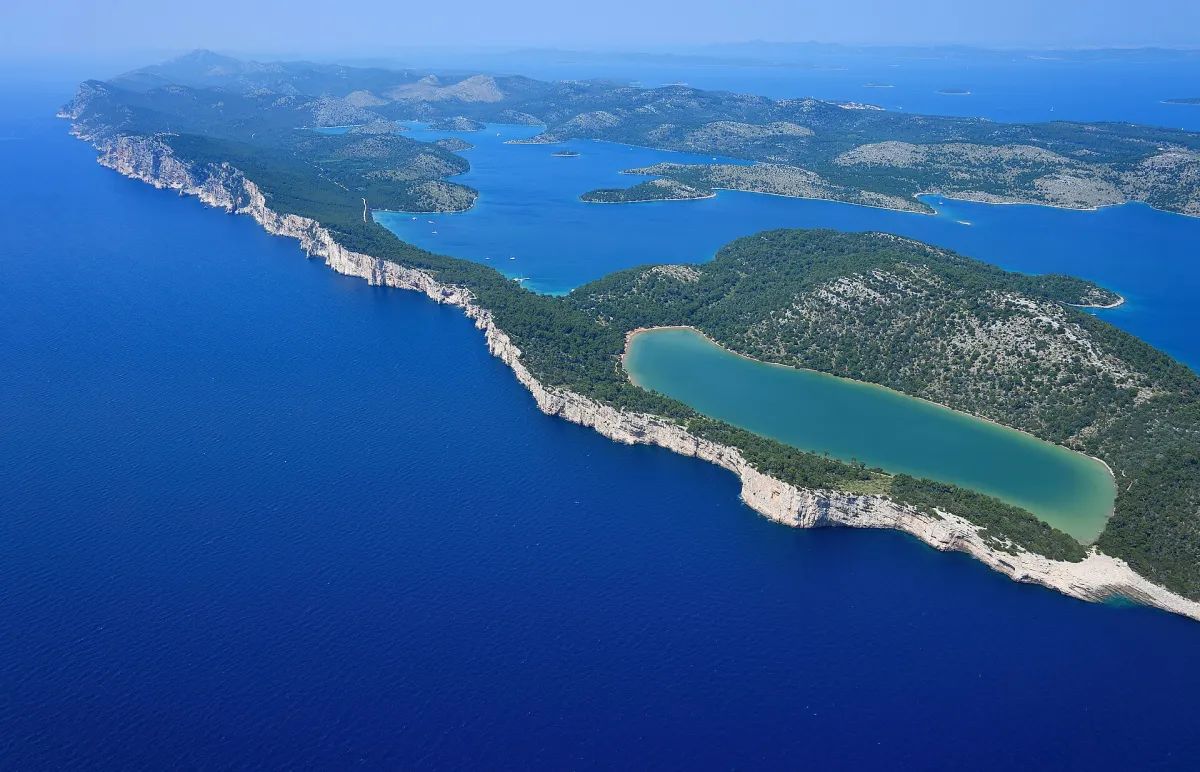
What you're coming for:
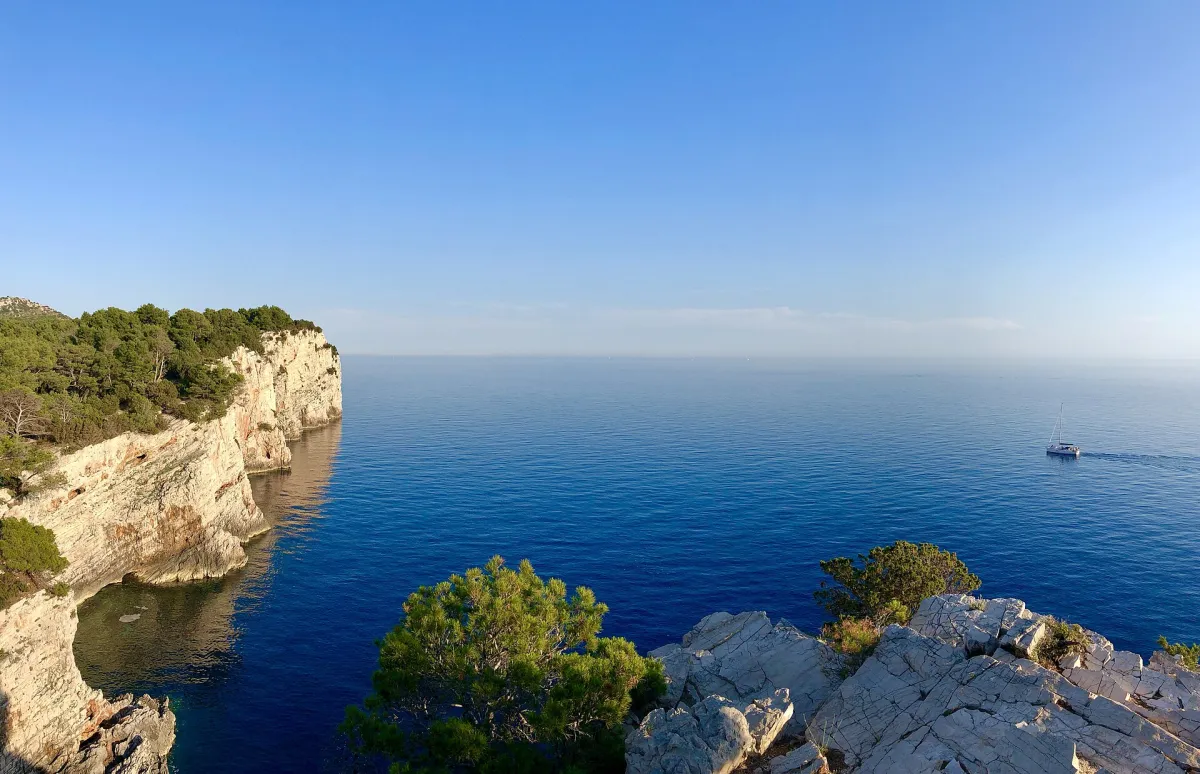
Telašćica Nature Park, at the island's southern end, where the Grpašćak cliffs stand 161 metres above the sea and drop about 90 metres below it. Tucked in behind them is Mir, a salt lake warmer than the sea and thick with therapeutic mud.
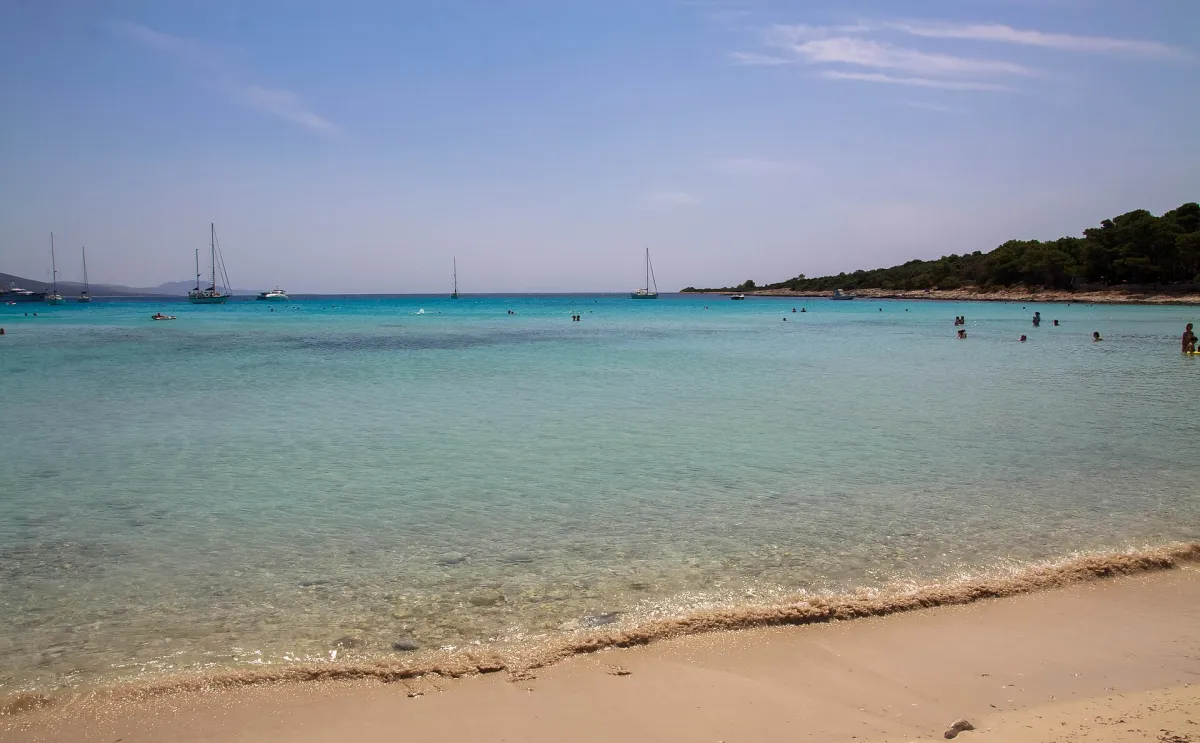
Sakarun, on the north side — a long shallow bay over white pebble and sand that turns the water an almost tropical turquoise. It's the postcard beach of the whole archipelago.
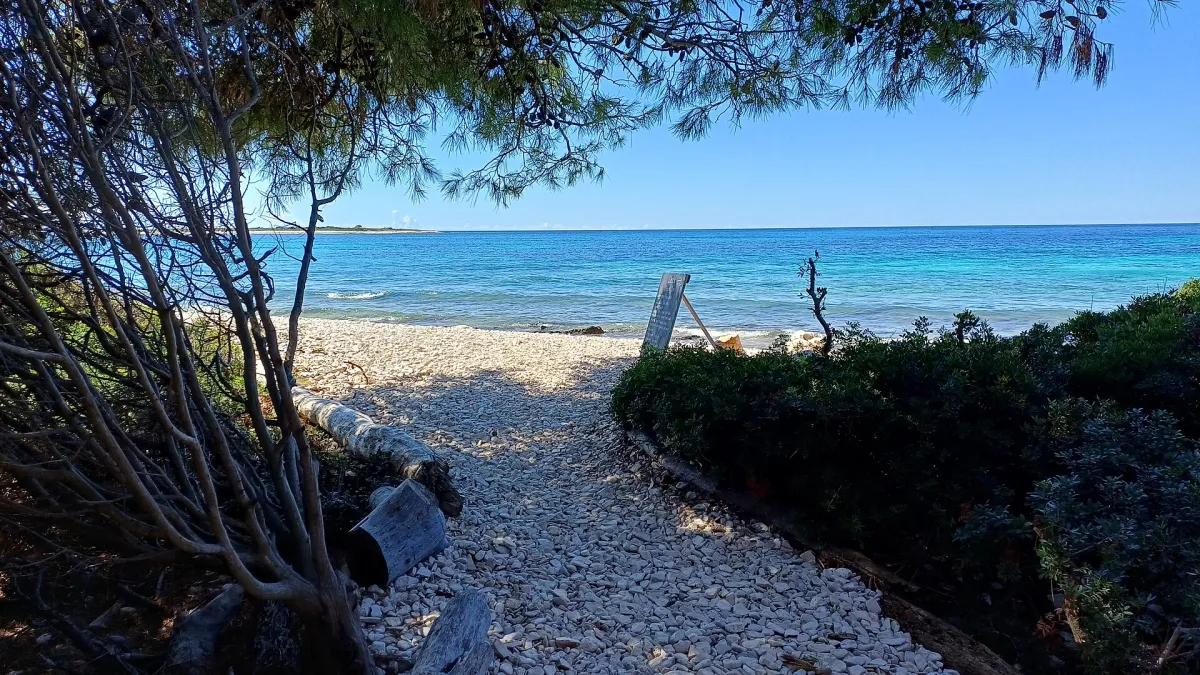
Veli Žal, on the opposite shore, and this is the one I'd send you to. It's a long white pebble beach facing the open Adriatic — which brings me to the thing that's easy to miss until you're standing there. Dugi otok has beaches that look out at nothing. Everywhere else around Zadar you're gazing across a channel at the next island. Here the western shore faces open sea, so the horizon is unbroken. It's a completely different feeling, and for me it's the real reason to make the trip.
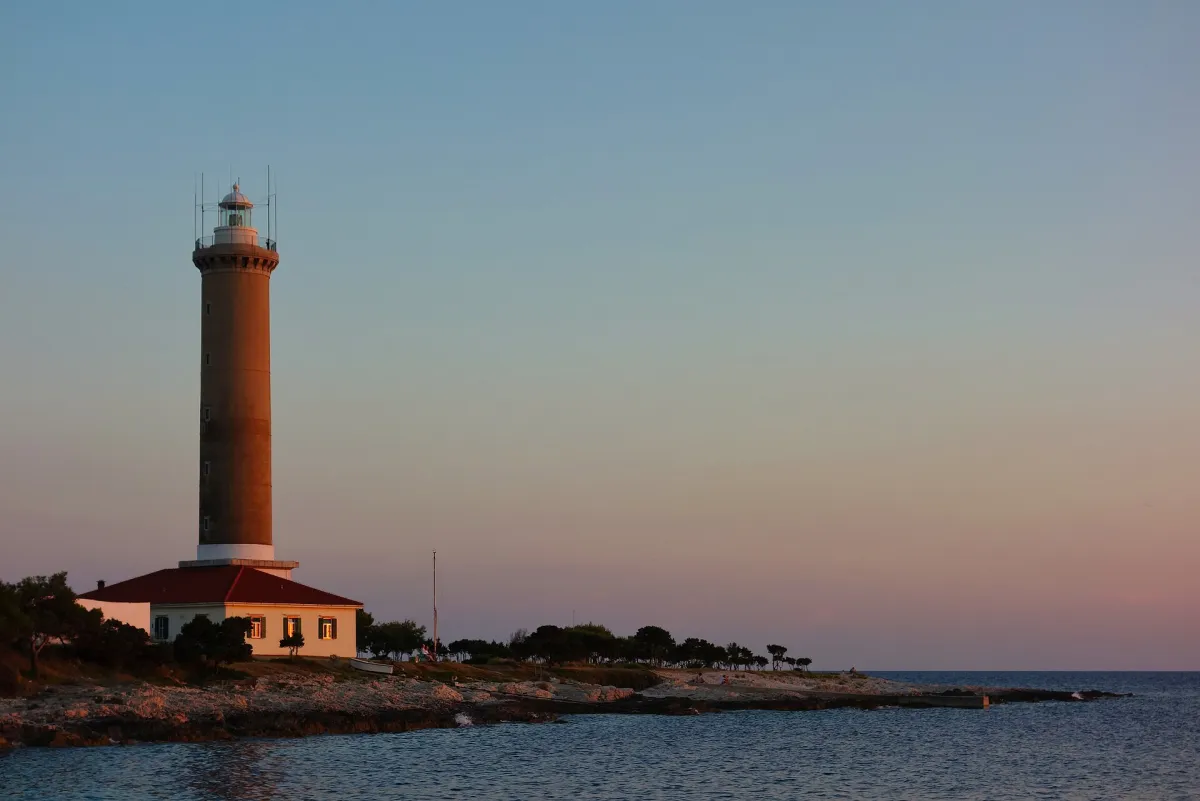
And at the northern tip, Veli Rat lighthouse, built in 1849 and 42 metres tall — the tallest on the Adriatic. Go at dusk.
Part 3 — Two that aren't quite islands (but almost)
Nin
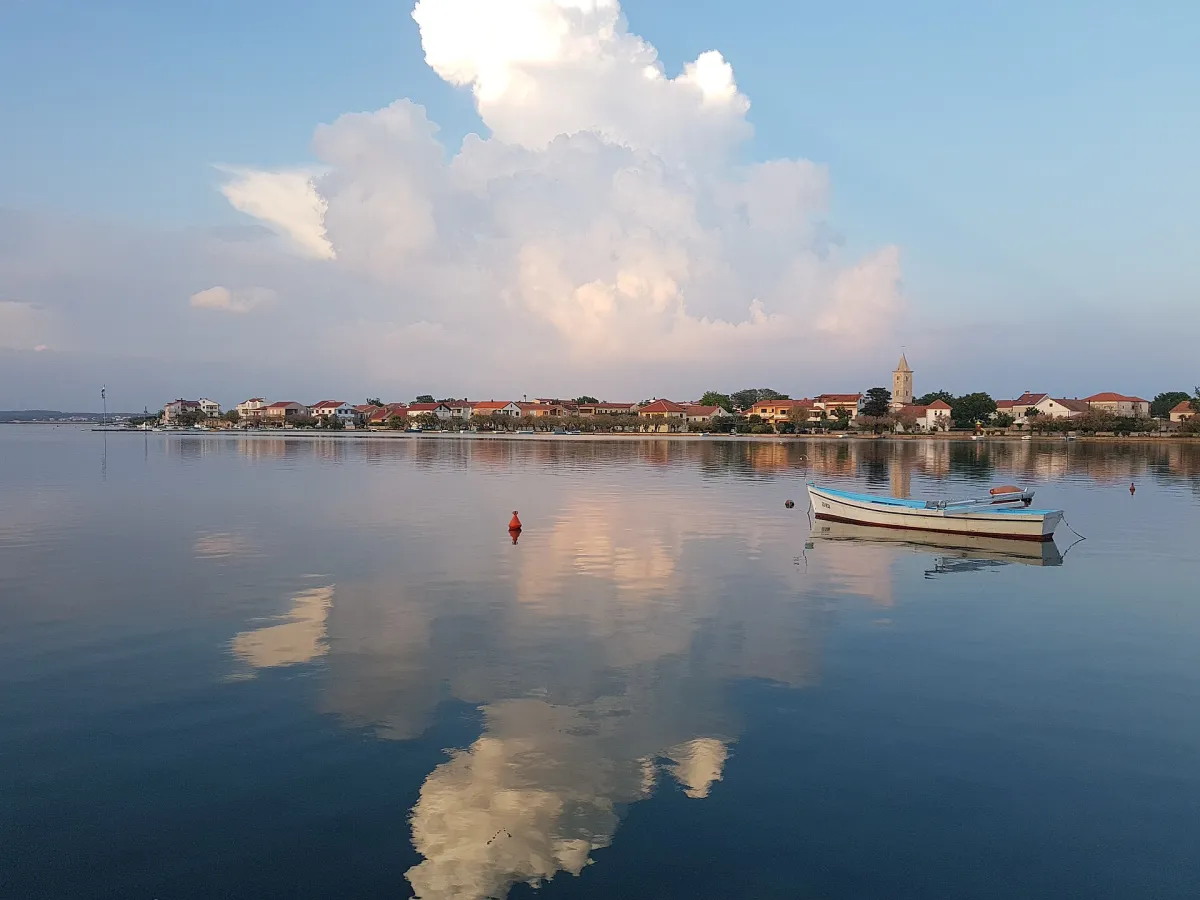
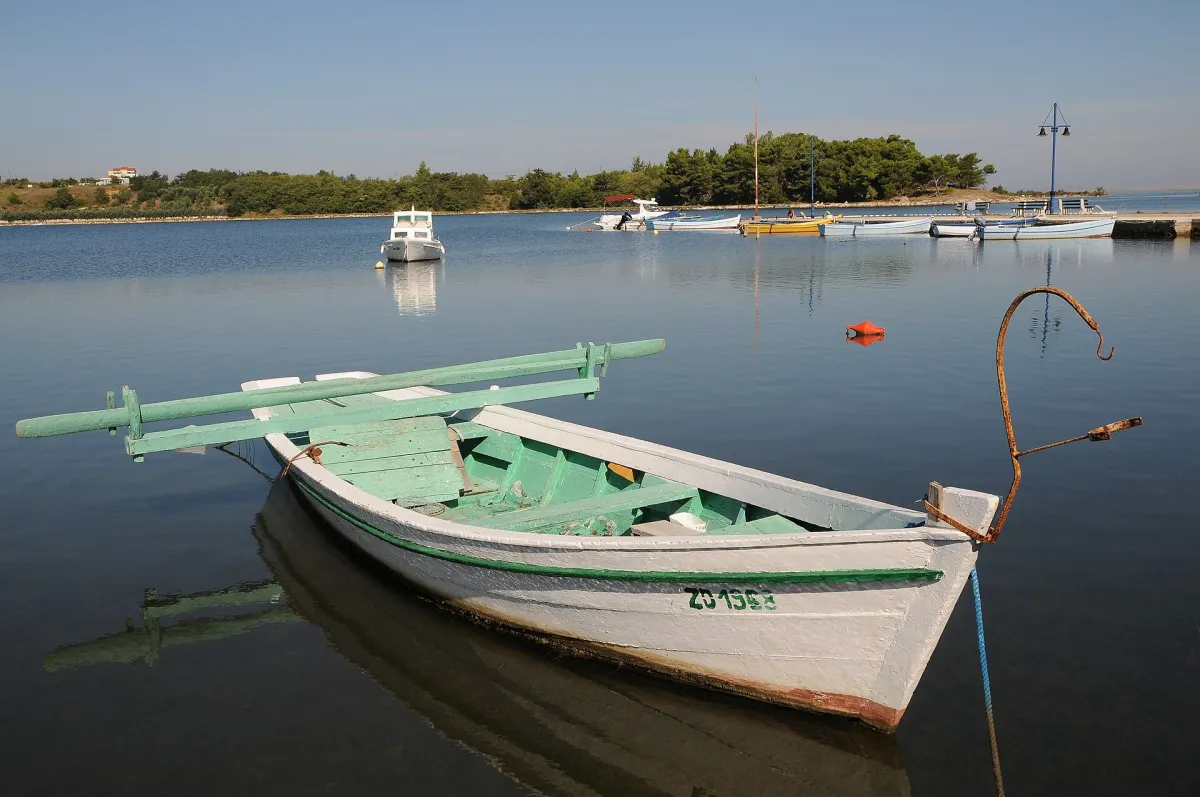
Fifteen kilometres from Zadar, and the historic core of Nin genuinely does sit on a small round island in a shallow lagoon, reached by two stone bridges. It's the oldest Croatian royal town — this is where medieval Croatian kings were crowned.
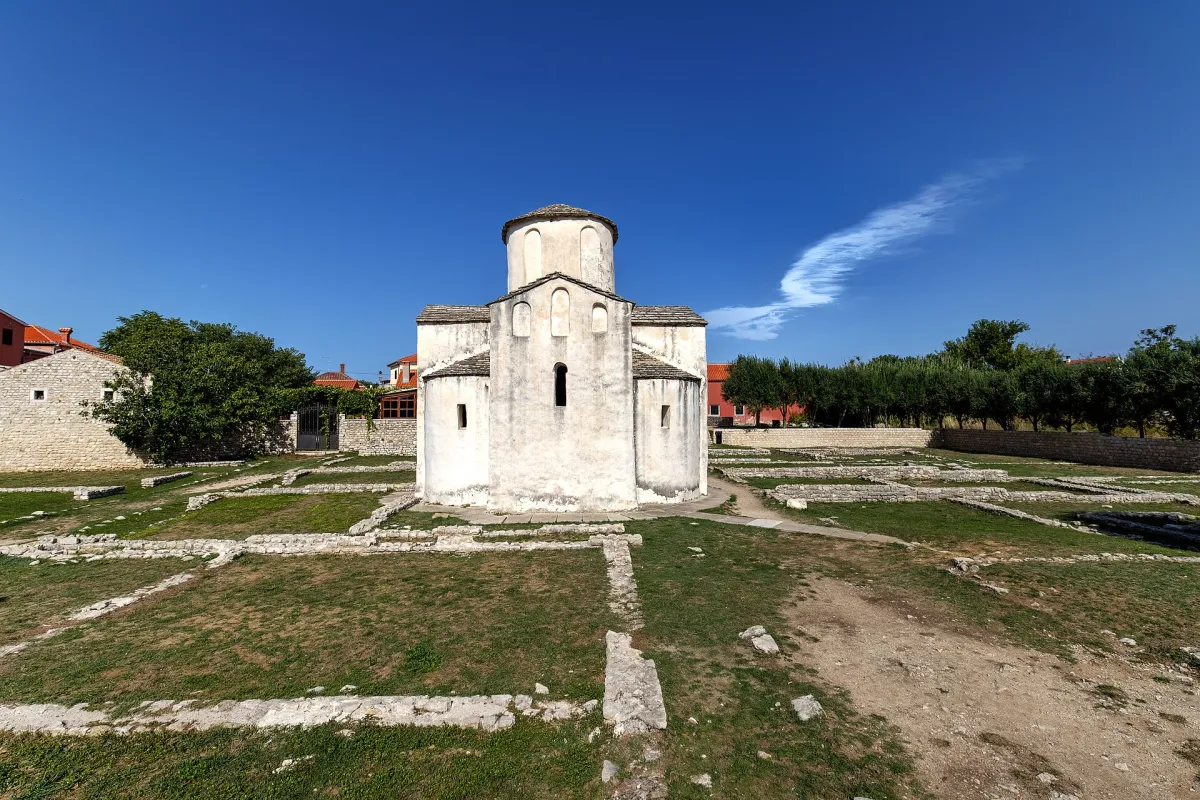
The Church of the Holy Cross is 9th-century, measures 7.8 by 7.6 metres, and is often called the smallest cathedral in the world. The lovely detail is that its windows are positioned so the light marks the solstices and equinoxes — a building used as a calendar.
Nin is also where you go for sand. Queen's Beach runs about 8 kilometres and is the longest sandy beach in Croatia, and the peloid mud alongside it has been a registered health resort since 1960. These are essentially the only real sand beaches in the Zadar area. They're also the shallowest entrances anywhere around here — you wade a long way before it gets deep. That makes Nin my first recommendation for small children, and the reason it's frustrating if you want to swim properly.
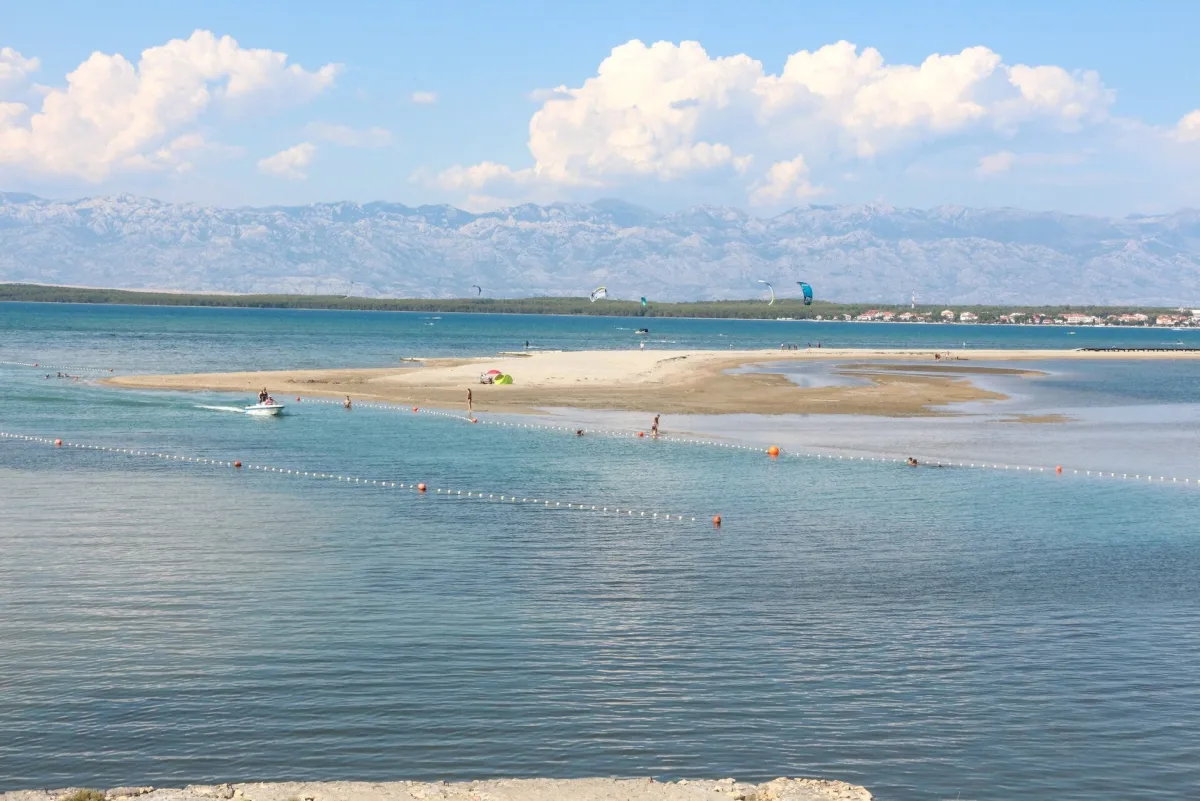
And across the lagoon you get the Velebit range on the horizon, which on a clear evening is the best thing about the whole place.
Poluotok
Here's the one that catches people out.
Zadar's Old Town is called Poluotok — "peninsula". But for most of its history it wasn't one: a moat cut it off from the mainland, and it functioned as an island. The moat was eventually filled in, and the small harbour Foša still carries the name, because foša means moat. The Venetian Land Gate, built in 1543, is what remains of that crossing.
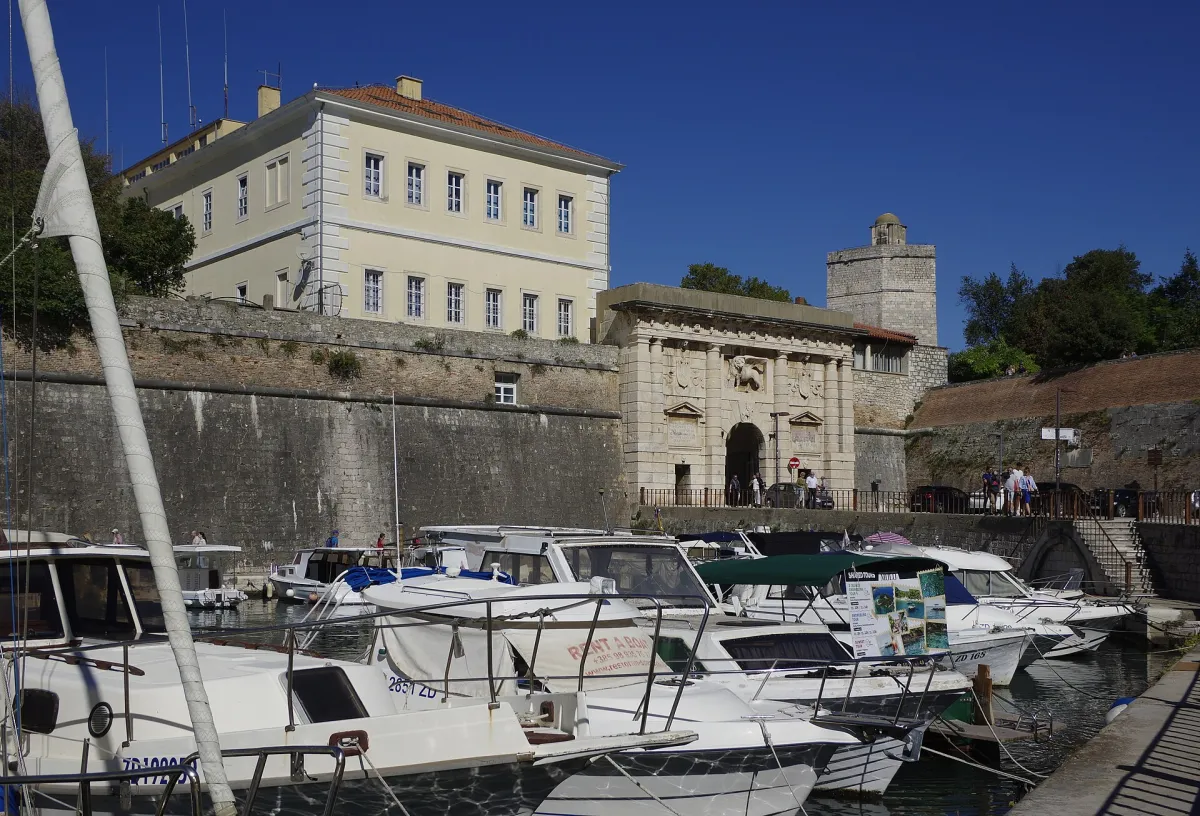
So the first island near Zadar is the one you're already standing on.
Which one should you pick?
- Shortest trip — Nin. Fifteen minutes, and you're on an island.
- Best beach — Sakarun or Veli Žal on Dugi otok, or Queen's Beach at Nin if you need sand.
- Most dramatic — Pag's moon landscape, or the Telašćica cliffs.
- With small kids — Nin. The entrances are the shallowest around here, and it's sand rather than pebble.
- A night out — Vir for the beach bars, Zrće on Pag if you want the full thing.
- Without a car — Ugljan. Frequent ferry, and plenty to do on foot from Preko.
Want photos on one of these islands?
These places are extraordinary to photograph, and I shoot on them all summer. If you're thinking about a love story session, a proposal, or a family shoot somewhere like Sakarun, Telašćica or the stone landscape on Pag — get in touch and tell me what you have in mind. I live here, so I know when the light is right at each of them, and I'm always happy to help you plan the day around it.
Photos in this article are free-licence images from Wikimedia Commons: cover by Ekki3 (CC BY-SA 4.0), Vir bridge by Böhringer Friedrich (CC BY-SA 2.5), Stogaj and Beritnica by Olgierd Rudak (CC BY-SA 4.0), Pag dry stone walls by Marko Jukić (CC BY-SA 4.0), Tisno bridge by Ante Perkovic (CC BY-SA 3.0), Kornati islet by Ajnudelim (CC BY-SA 4.0), Kornati at sunset by Julien Seguinot (CC BY-SA 2.0), Preko ferry by Falk2 (CC BY-SA 4.0), Telašćica aerial by Carsten Steger (CC BY-SA 4.0), Telašćica cliffs by Hidratična (CC BY-SA 4.0), Sakarun by Greta Ceresini (CC BY 2.0), Veli Žal by Romanm (CC BY-SA 4.0), Veli Rat lighthouse by Ivan zilich (CC BY-SA 4.0), Queen's Beach by Przemek Pietrak (CC BY-SA 3.0), Nin lagoon by Marija D. Nin (CC BY-SA 4.0), Church of the Holy Cross by Paula Borkovic (CC BY-SA 4.0), Nin boat by Böhringer Friedrich (CC BY-SA 2.5), Zadar Land Gate by Berthold Werner (CC BY-SA 4.0).